


Written by Tiffany McLean, Veteran Stylist at Suits & More
Tiffany McLean is a veteran stylist at Suits & More who has spent years dressing men for church, events, and special occasions. She has a deep appreciation for the cultural tradition that the walking suit carries forward - and believes that understanding where a style comes from makes wearing it mean more.
Last updated: February 2026
The Cultural Roots of the Walking Suit: From the Harlem Renaissance to Today
When a man puts on a walking suit - a coordinated shirt and pants set, hat on his head, shoes shined - he is participating in something much older than he might realize. The look did not arrive from nowhere. It has a lineage. And that lineage runs directly through some of the most significant moments in Black American cultural history.
This post is not a general style guide. It is the story of where the walking suit actually comes from - the specific tradition of Black men using coordinated dress as a statement of dignity, identity, and presence. Understanding that history makes wearing one feel different. It should.
Harlem in the 1920s: Where It Begins
The story starts with the Great Migration. Beginning around 1916, hundreds of thousands of Black Americans left the rural South for northern cities - Chicago, Detroit, and most significantly, Harlem in New York City. They arrived in a neighborhood that was, as historian Monica L. Miller of Barnard College describes it, "specifically magnificent, with wide avenues and broad sidewalks, excellent grand apartments." And they dressed to match.
This was not vanity. It was intention. Monica L. Miller, Professor of Africana Studies at Barnard College and author of Slaves to Fashion: Black Dandyism and the Styling of Black Diasporic Identity, explains that dressing well during this period was "part of a campaign to express to the world that Black people were on the cutting edge of modernity." In a society that actively denied Black Americans full citizenship, how you presented yourself in public was a form of argument. A tailored suit was a statement that could not be ignored.
Harlem Renaissance men's fashion had a distinctive vocabulary: tailored suits in silk and fine wool, high-waisted trousers, wide lapels, fedoras and homburgs, pocket squares, polished shoes. Details mattered deeply - the right chain, the right hat angle, the right fit. Duke Ellington set the standard for the era - always seen in immaculate tailored suits and refined eveningwear, projecting a calm authority that matched his musical brilliance. The clothes were part of the statement.
The Zoot Suit: Rebellion as Elegance
By the late 1930s, a new silhouette had emerged from Harlem's jazz and swing scene - the zoot suit. It took the elegance of the Renaissance era and turned up the volume dramatically. High-waisted, wide-legged trousers, long jackets with padded shoulders, and bold accessories like fedoras and pocket chains - the look was intentionally exaggerated, impossible to overlook. Zoot suits were expensive, attention-getting and identified wearers with the posh club scene of the Harlem Renaissance, according to historian Cynthia Clampitt.
Cab Calloway, who helped popularize the style on stage at the Cotton Club, wore it with theatrical authority. Malcolm X wore it as a young man in the early 1940s. The fabric swung as the dancers did - the suit was designed for movement, for the dance floor, for being seen.
But the zoot suit was also a target. This oversized look was more than a fashion statement - it was an act of rebellion, asserting individuality in a society that sought to suppress Black expression. During World War II, with fabric under rationing, white America decided that the excess material in a zoot suit was unpatriotic - a convenient justification for what was, at its core, racial hostility. As PBS American Experience documents, in 1943 law enforcement officers aided by white sailors terrorized Mexican American neighborhoods in search of "zoot-suiters," beating and apprehending hundreds of young men, including Black and Filipino Americans.
The hostility directed at the zoot suit tells you exactly how powerful it was. Clothing that provokes that kind of reaction is not just clothing. It is a declaration.
The 1970s: The Leisure Suit and the Coordinated Set
The zoot suit's silhouette faded after the war, but the philosophy behind it did not. By the 1970s, a new form of coordinated menswear had emerged - the leisure suit. Where the zoot suit was structured and defiant, the leisure suit was relaxed and expressive. A casual suit consisting of a shirt-like jacket and matching trousers, it offered something the formal menswear world had never prioritized for Black men: comfort without sacrificing sharpness.
The 1970s leisure suit era was flamboyant by design. Bold colors, wide lapels, paisley and plaid patterns, polyester that moved well and held color beautifully. It was the decade, as fashion historians note, when men "peacocked" - dressed to be seen, dressed with personality, dressed in ways that formal menswear had always suppressed. Black men, drawing on a tradition that ran back through the zoot suit to the Renaissance, were at the center of that energy.
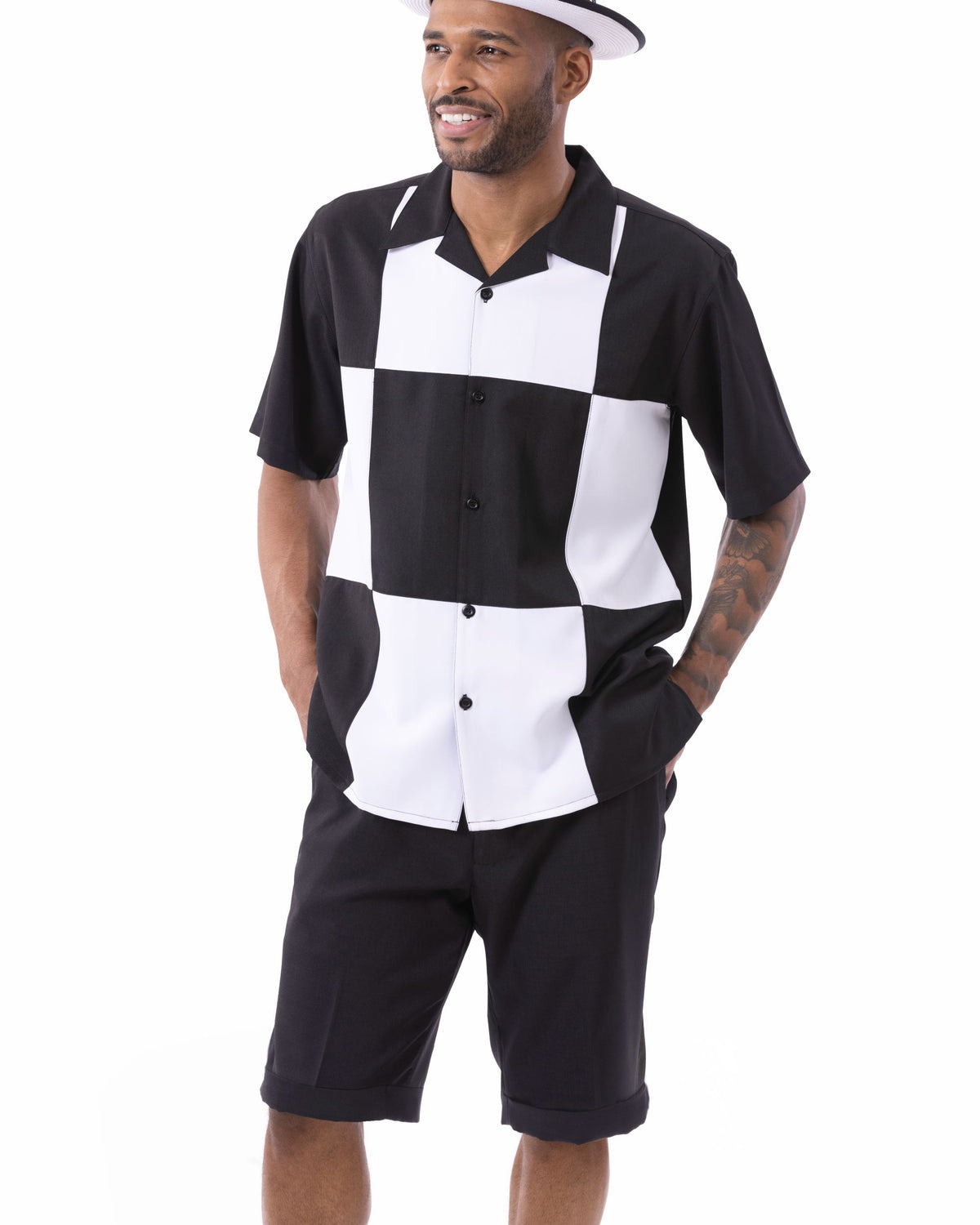
The coordinated set - shirt and pants designed as a unit, worn together as a complete look - was the natural evolution of everything that had come before. Not a jacket over a dress shirt. Not a tie. The shirt itself as the statement piece, paired with matching trousers, finished with a hat and the right shoes. That is the walking suit. That is what it has always been.
What the Walking Suit Carries Forward Today
The 2025 Met Gala chose "Superfine: Tailoring Black Style" as its theme - a direct acknowledgment from the highest institution in American fashion that Black men's sartorial tradition is not a subcategory or a footnote. It is the main story. The exhibition was developed directly from Monica L. Miller's scholarship - her book Slaves to Fashion is its intellectual foundation, and Miller herself was involved in bringing it to the Met Costume Institute. The exhibition traced the full lineage of Black dandyism from the 18th century to the present. Walking suits were not displayed as nostalgia. They were presented as a living tradition.
That tradition is exactly what men are participating in when they dress for church on a Sunday, or for a family celebration, or for any occasion where showing up well is a form of respect - for the room, for the occasion, and for themselves. The walking suit sits at the intersection of comfort and intention. It says: I dressed this way on purpose. I know what I am doing. I belong here.
Dressing With That Knowledge
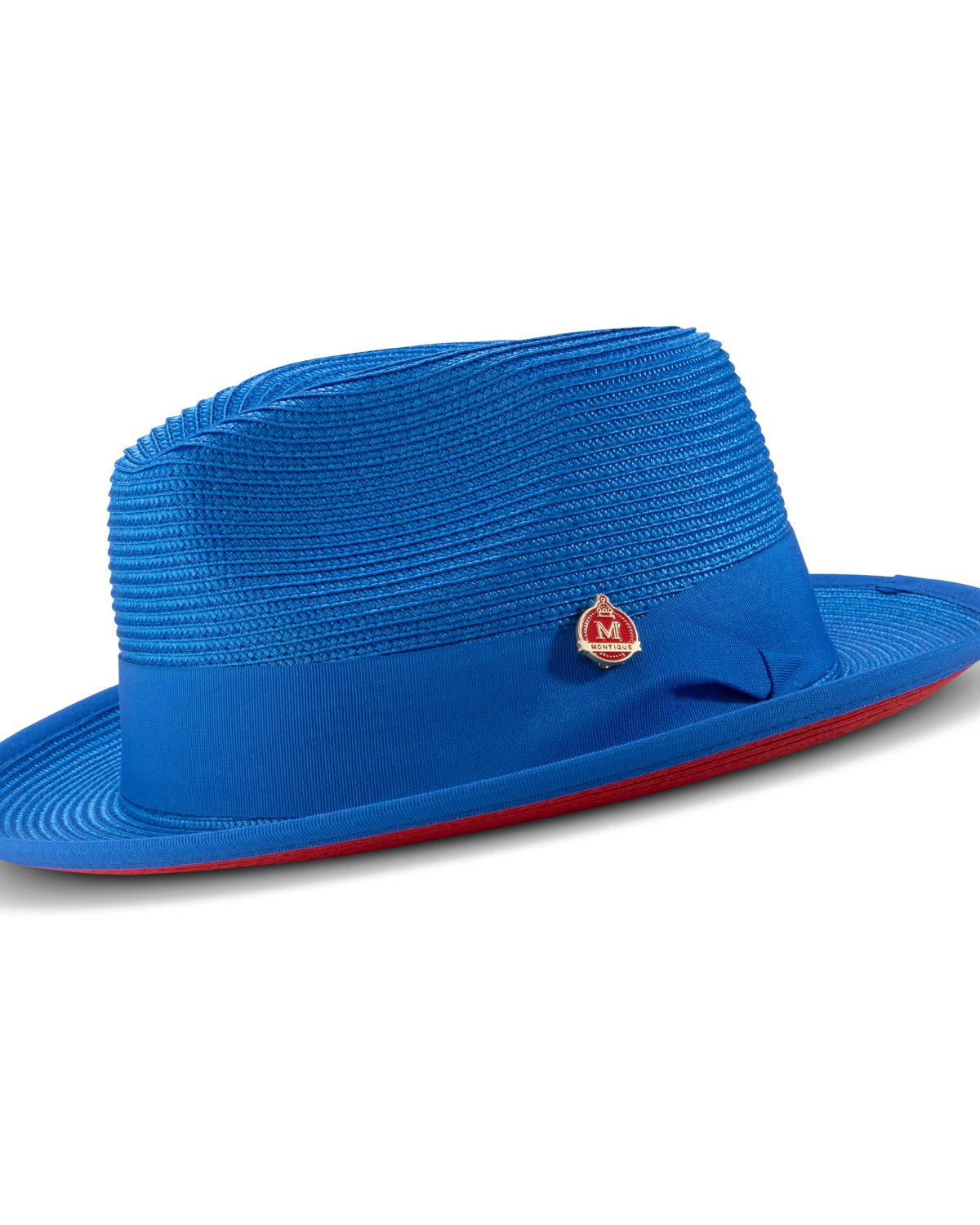
Knowing this history changes how a walking suit feels to put on. The fedora is not an accessory - it is a continuation of a hat tradition that runs from the Renaissance through every era of this lineage. The coordinated shirt and pants are not a convenience - they are the direct descendant of the zoot suit's complete, unapologetic statement. The care taken with color, fit, and accessories is not vanity - it is a form of cultural fluency that Black men developed under conditions that demanded it.
When a man puts on a walking suit with intention - the right hat, the right shoes, everything coordinated and considered - he is doing what men in this lineage have always done. Dressing with purpose. Showing up with care. Making a statement that does not need words.
That history belongs to the style itself. It is worth knowing before you wear it.
Frequently Asked Questions
What is the history of the walking suit?
The walking suit has roots in a continuous tradition of Black American coordinated menswear dating back to the Harlem Renaissance of the 1920s and 1930s. That tradition continued through the zoot suit era of the 1940s, evolved into the leisure suits of the 1970s, and lives today in the coordinated shirt and pants sets known as walking suits.
What is the connection between the zoot suit and the walking suit?
Both represent the same fundamental idea - that a man's clothing is a statement of dignity, identity, and presence. The zoot suit expressed this through exaggerated, defiant silhouettes. The modern walking suit expresses it through coordinated, intentional elegance. The philosophy is the same; the form has evolved.
Why is dressing well significant in Black American culture?
Scholars like Monica L. Miller of Barnard College describe intentional dressing as a form of cultural assertion dating to the Great Migration. Dressing well was, as Miller notes, "part of a campaign to express to the world that Black people were on the cutting edge of modernity." That tradition runs unbroken through today.
What did the Harlem Renaissance mean for men's fashion?
The Harlem Renaissance produced a distinct men's fashion identity - tailored suits, fedoras, bold accessories - worn with deliberate elegance that was both personal and cultural. Icons like Duke Ellington set the standard: impeccable presentation as a form of authority and pride.
More Reading
What Is A Walking Suit? - A Comprehensive Guide
Color Theory: Picking the Right Shades for Your Walking Suit
Why Walking Suits are Stealing the Spotlight at Modern Weddings
The Resurgence of Walking Suits: A Walkthrough of Stylish Comfort