

Written by Tiffany, Style Contributor at Suits & More
Tiffany covers men's footwear, accessories, and outfit styling for Suits & More. She has a particular interest in the history of men's hats and how classic silhouettes translate into modern wardrobes.
Last updated: September 2026
The fedora has one of the most durable histories in men's fashion. It emerged in the late 1800s, became the defining hat of the 1920s through the 1960s, faded in the decades that followed, and has now returned with enough force to show up consistently across menswear collections and street style. The difference between wearing a vintage fedora well and wearing it as costume comes down to understanding which era you are drawing from and how to translate its specific details into a current outfit.
This guide covers the three defining eras of fedora style - the 1920s, the 1940s and 50s, and the 1960s - with the specific features that defined each period and exactly how to work those styles into a modern wardrobe. Whether you are buying your first fedora or adding to an existing collection, knowing the history behind the hat makes the styling choices significantly clearer.
The 1920s Fedora: Bold, Wide, and Built for Presence
The 1920s were the fedora's first major cultural moment. The silhouette of the era was defined by a wide, downward-sloping brim - wide enough to cast a shadow across the face - and a high, structured crown with a center crease. The materials were predominantly wool felt and straw, built for durability and presence rather than lightness. Hat bands in contrasting ribbon, often with a bow or side accent, were a signature detail of the period.
The 1920s fedora was worn as a complete statement. It was not a finishing touch - it was the focal point of the outfit. Men of that era wore their hats with three-piece suits, long overcoats, and formal dress shirts. The hat carried the same visual weight as the suit itself.
How to wear the 1920s style today. A wide-brimmed fedora with a ribbon band is the cleanest entry point into this era's aesthetic. Pair it with a coordinated suit in a rich, deep color - navy, charcoal, or black - and let the hat's width and presence do what it was designed to do. For a less formal take, a wide-brim straw fedora from our summer collection worn with a casual outfit translates the era's boldness into warm-weather dressing without the full formal commitment.
The feather accent is the most distinctive 1920s fedora detail and the one that most immediately signals the era. A well-placed feather in the hat band - positioned at the side or back rather than the front - adds the period's characteristic individualism without overwhelming a modern outfit. It is a small detail that communicates a genuine understanding of where the style comes from.

The 1940s and 1950s Fedora: The Golden Age of Clean Lines
If the 1920s fedora was bold and theatrical, the fedoras of the 1940s and 1950s were refined and disciplined. This was the hat at its most polished - a medium brim that sat level or with a slight downward tilt at the front, a structured crown with clean creases, and colors that favored the controlled rather than the expressive. Soft grey, warm brown, tan, and camel were the dominant neutral tones of the period. The hat said sophistication rather than spectacle.
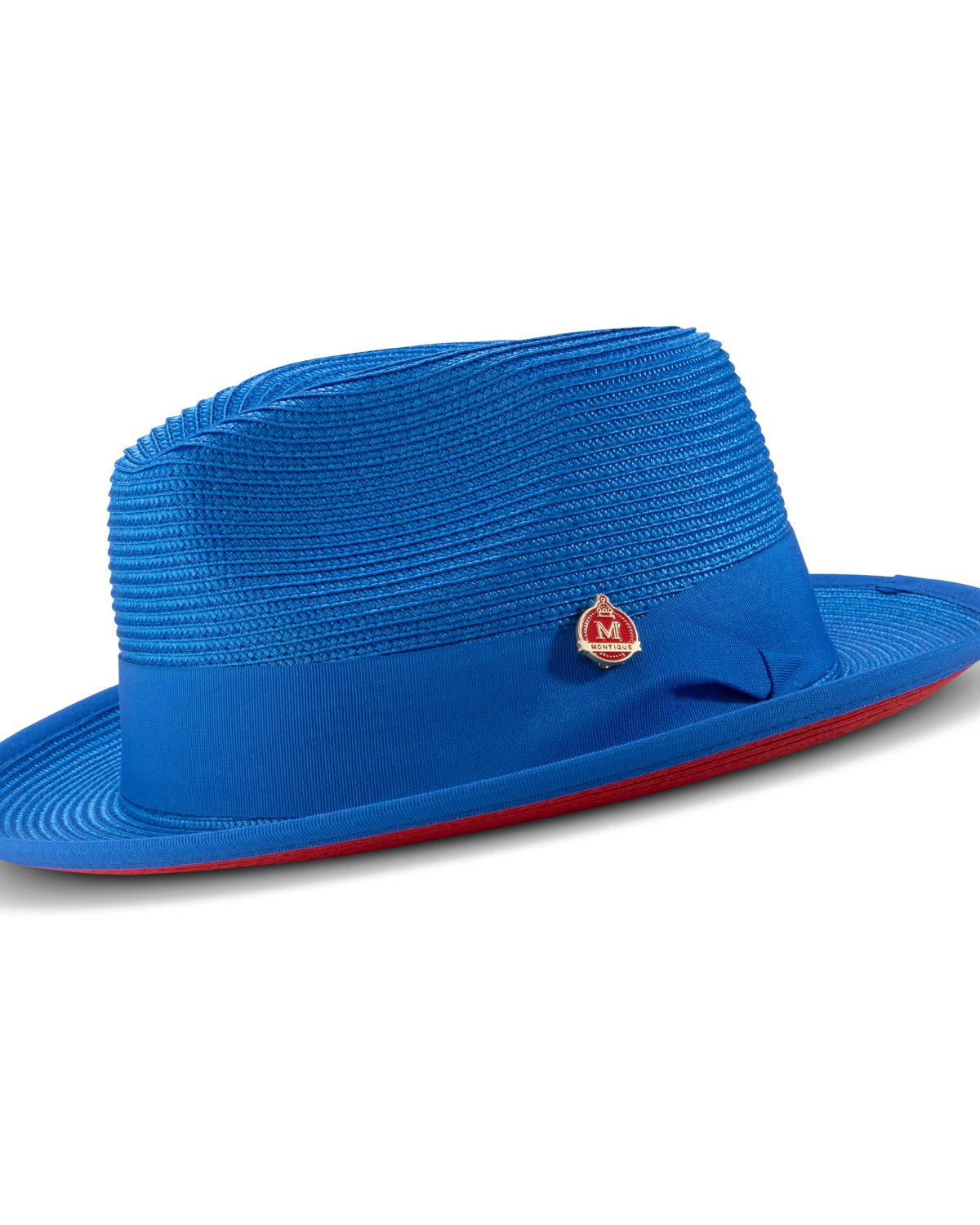
This was also the era when bolder hat colors began to emerge as a counterpoint to the neutral mainstream. A deep burgundy or rich navy blue fedora worn with a sharp suit was a deliberate statement of confidence - less common than the neutrals, and therefore more distinctive when executed correctly.
How to wear the 1940s and 1950s style today. The mid-century fedora translates most directly into current men's fashion because its proportions are closest to contemporary hat construction. A grey or brown felt fedora with a medium brim and a clean ribbon band works alongside a modern tailored suit with no period-costume reading at all - it simply reads as sharp and considered. The key is in the fit: a 1940s-inspired fedora should sit level on the head, positioned just above the ears, with the brim at a slight front angle rather than cocked to the side.
For a more casual application, a tan or camel fedora alongside a dark walking suit creates a warm, tonal combination that draws directly on mid-century color sensibility while remaining entirely contemporary in its styling.

The 1960s Fedora: Minimalism as a Statement
The 1960s brought a deliberate move away from the structured formalism of previous decades. The fedora adapted accordingly - brims narrowed, crowns lowered slightly, and the overall silhouette became cleaner and more streamlined. The 1960s fedora was the hat stripped back to its essential shape, and that restraint became its own kind of statement. Less material, cleaner lines, quieter colors. Soft beige, muted olive green, light grey, and understated neutrals defined the era's palette.
The sixties also saw a shift toward lighter fabrics as the fedora became more of an everyday accessory and less of a formal fixture. Straw and lightweight constructions became more common alongside the traditional wool felt, making the hat more adaptable across settings and seasons.
How to wear the 1960s style today. The slim, minimalist 1960s fedora is the most versatile of the three eras for current dressing because its restraint works across both casual and formal contexts without calling too much attention to its historical reference. A clean, narrow-brimmed grey or olive fedora alongside a contemporary casual outfit adds refinement without formality. The same hat with a sharp suit reads as modern and considered rather than period-specific.
The sixties principle of letting the hat's shape do the work - rather than its details or decorations - is a useful guide for accessorizing any vintage-inspired fedora in a modern context. A simple, well-proportioned hat worn at the correct angle often communicates more style than an elaborate one worn carelessly.
Accessorizing a Vintage-Inspired Fedora
The accessories you choose around a vintage fedora determine whether the hat reads as a cohesive style choice or an isolated costume element. The goal is to build an outfit where the hat's historical reference connects naturally to everything else rather than standing alone as the single period detail.
Hat bands and feathers. The hat band is the easiest detail to use for connecting the fedora to the rest of the outfit. A hat band in a color that echoes the suit, the shirt, or the shoes creates a visual thread that ties the hat into the full look. A feather accent in a complementary tone adds the period's characteristic personality while remaining within a coherent color palette. Choose the feather color based on the warm or cool tone of the rest of the outfit rather than treating it as an independent detail.
Suit and outfit coordination. All three fedora eras were built around tailored suiting. A vintage-inspired fedora works best when the outfit underneath has some structure to match - a coordinated walking suit, a blazer, or a traditional suit creates the kind of finished, considered look that makes the hat's presence feel earned. A vintage fedora over an unstructured casual outfit can work for the 1960s minimalist style, but the 1920s and 1940s versions need the structure of a suited outfit to read correctly.
Fit as the non-negotiable detail. A vintage-inspired fedora that does not fit correctly undermines everything else about the look. The hat should sit level on the head, approximately one finger-width above the ears and eyebrows, secure without squeezing. If you are between sizes, size up and use a hat size reducer insert for a precise fit - we can include one with your purchase on request. A hat that shifts with movement or sits too far back on the head reads as borrowed rather than worn.

How to Choose Which Era to Draw From
The clearest guide for choosing which fedora era to draw from is your existing wardrobe and the occasions you plan to wear the hat for most.
If your wardrobe runs toward bold colors, wide-brim styles, and statement dressing - the 1920s is your reference point. A wide-brim fedora with a ribbon band and a feather accent fits naturally into an expressive, high-presence wardrobe and adds historical depth to a bold look.
If your wardrobe is built around tailored suits, rich neutrals, and polished professional or formal dressing - the 1940s and 1950s is the strongest reference. The mid-century fedora's clean proportions and refined color palette coordinate naturally with a well-built formal wardrobe and work across the widest range of occasions.
If your wardrobe is more casual, contemporary, and minimal - the 1960s is the most practical starting point. The slim, streamlined silhouette and quiet color palette of the sixties fedora integrates into a current casual wardrobe without requiring a formal outfit around it to look right.
Frequently Asked Questions About Vintage Fedora Styles
What is the difference between a vintage fedora and a regular fedora?
Vintage fedora styles refer to the specific silhouettes, proportions, and details that defined the hat across particular decades - the wide brim and high crown of the 1920s, the refined medium brim of the 1940s and 50s, and the streamlined narrow brim of the 1960s. Modern fedoras often blend elements from multiple eras. A vintage-inspired fedora intentionally references the proportions and details of one specific period rather than creating a generalized hat shape.
Are wide-brim fedoras in style?
Wide-brim fedoras are consistently strong in men's fashion and represent one of the more actively present vintage references in current menswear. The wide brim's combination of bold visual presence and practical sun coverage makes it relevant for both style and function. In the Suits & More collection, wide-brim styles from the summer pinch and felt collections are among the strongest performers year over year.
What outfits work best with a vintage-inspired fedora?
Tailored and structured outfits - suits, walking suits, blazers with dress trousers - provide the strongest foundation for vintage fedora styles because they match the hat's level of formality and historical context. The 1960s minimalist fedora is the most flexible and works alongside casual outfits as well. In all cases, the hat should sit within a complete, coordinated outfit rather than appearing as the single dressed-up element in an otherwise casual look.
What color fedora is the most versatile?
A medium tan, natural straw, or grey fedora is the most versatile color choice because it coordinates with the widest range of suit and walking suit colors. Black fedoras are strong for formal and dark-suited occasions. Burgundy and navy add personality and work particularly well with contrasting lighter suits. For a first vintage-inspired fedora, a natural straw or tan felt in a medium brim width covers the broadest range of outfits and occasions.
How should a fedora sit on the head?
A fedora should sit level on the head, approximately one finger-width above the ears and brow line. It should feel secure without squeezing and should not shift when you move. The brim can be worn flat or with a slight downward tilt at the front depending on the era and style - the 1920s style often tilted slightly downward, while the 1940s style typically sat level. Measure your head circumference before buying and use a hat size reducer if needed for a precise, comfortable fit.
Ready to find your fedora? Browse our full fedoras collection at Suits & More, including summer styles, felt hats, and hat accessories. Every order ships from Newark, NJ with free shipping on orders over $75.
Read More: Summer Fedora Styling: Mastering the Art of the Perfect Accessory