

Written by Taylor Rego, Men's Style Editor at Suits & More
Taylor has spent years helping men build sharp, coordinated wardrobes. She covers everything from suit selection and fit to accessories and occasion dressing for Suits & More.
Last updated: August 2026
A suit is one of the most powerful tools in a man's wardrobe - but only when worn correctly. The quality of the fabric, the strength of the color, and the price of the label mean nothing if the basics are wrong. Fit, proportion, grooming, accessories, and occasion-awareness are what separate a man who looks sharp in a suit from one who simply owns one.
These are the ten most common suit mistakes men make - and what to do instead to get the look right every time.
1. Wearing a Suit That Does Not Fit
Fit is the single most important factor in how a suit looks - more important than brand, fabric, or price. A poorly fitted suit undermines everything else about the outfit. A jacket that pulls across the shoulders, trousers that bunch at the knees, or a blazer that hangs off the body like a sack communicate that the suit was not chosen for the man wearing it.
The jacket shoulder seam should sit exactly at the edge of your shoulder - not hanging past it, not pulling up short of it. The chest should lay flat without pulling at the button. The trouser break should be clean and intentional - a slight break at the shoe for a classic look, no break for a modern cut. When buying off the rack, factor in tailoring costs as part of the suit purchase. A moderately priced suit that fits correctly looks significantly better than an expensive suit that does not.

2. Mismatched Shoes and Belt
The shoe and belt are the two leather elements that anchor a suit outfit, and they must match in both color and finish. Black shoes with a black belt. Brown shoes with a brown belt. Tan shoes with a tan or cognac belt. Mixing leather colors - a brown belt with black shoes, or vice versa - breaks the visual continuity of the outfit in a way that is immediately noticeable.
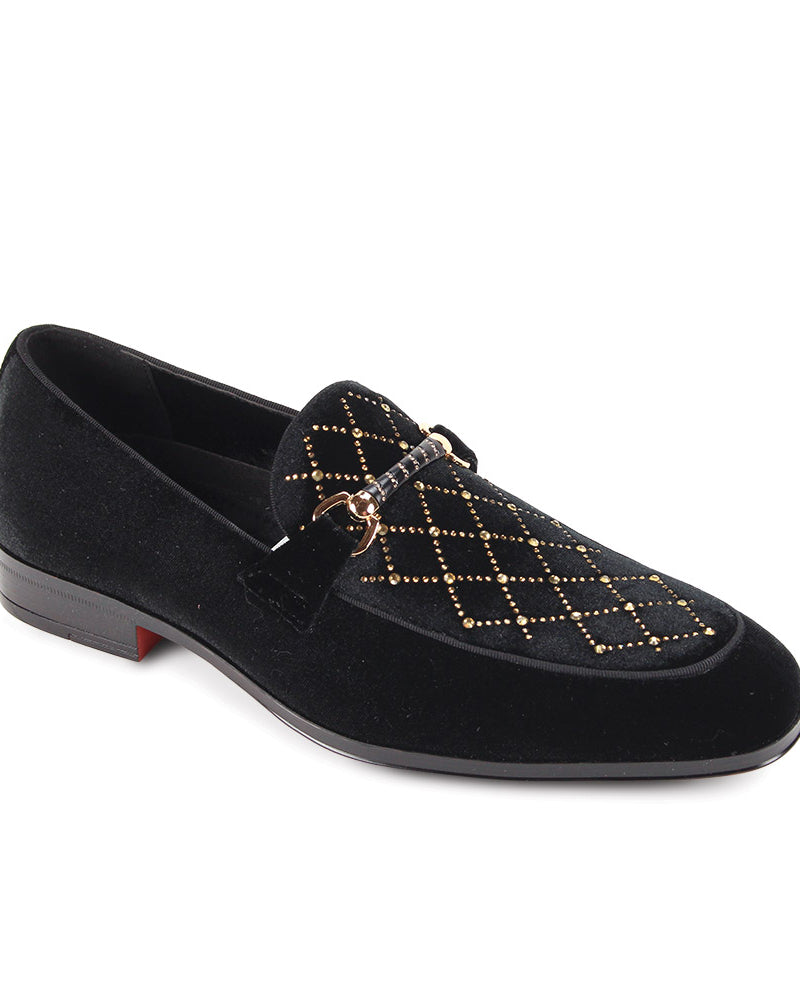
The finish should also match. A polished leather shoe alongside a matte leather belt, or a smooth-grain shoe alongside a heavily textured belt, creates a disconnect that undermines the coordination of the look. When building a suit outfit, match the shoes and belt first - everything else follows from that foundation. Browse our full shoe collection for styles that coordinate with every suit color.
3. Over-Accessorizing
Accessories add personality to a suit. Too many accessories at once create noise rather than personality. A tie bar, a pocket square, and cufflinks together constitute a complete, polished accessory set for most formal occasions. Adding lapel pins, multiple rings, bracelets, and a statement watch on top of that produces visual competition - the eye does not know where to settle and the overall impression is cluttered rather than coordinated.
Choose two or three accessories that work together and let them do the work. A well-chosen pocket square and a clean watch is a complete look. A tie bar, a pocket square, and cufflinks is a complete look. Each piece should have a clear purpose in the outfit - if you cannot identify what role an accessory is playing, leave it out. Browse our accessories collection for pieces that complement without competing.
4. Neglecting Grooming
A suit creates a strong first impression, and grooming either reinforces or undermines that impression immediately. Untrimmed facial hair, an unkempt haircut, or visibly unclean hands alongside a sharp suit create an inconsistency that registers instantly. The grooming communicates whether the suit is part of a deliberate presentation or just something that was put on.
Grooming standards for suit occasions do not require a clean shave or a specific haircut - they require that whatever choices are made look intentional and maintained. A well-kept beard alongside a suit reads as deliberate. An untrimmed, uneven beard alongside the same suit reads as careless. The same principle applies to hair, nails, and skin. The suit sets the standard - grooming needs to match it.

5. Choosing the Wrong Tie
A tie that clashes with the suit in color, competes with it in pattern, or is the wrong width for the lapel damages the entire outfit. Tie width should be proportional to lapel width - a wide lapel calls for a wider tie, a narrow lapel calls for a slimmer tie. When the proportions are mismatched, the outfit looks unbalanced regardless of how well-chosen the individual pieces are.
Pattern coordination follows a clear principle: one dominant pattern per outfit. A patterned suit calls for a solid or subtly patterned tie. A solid suit gives you more flexibility with the tie pattern. When mixing patterns - a striped tie with a checked suit, for example - the patterns should differ in scale so they do not compete directly. Color should connect the two: choose a tie that picks up a color already present in the suit rather than introducing a third competing color into the palette.
6. Incorrect Buttoning
Suit jacket buttoning follows a specific convention that affects both the appearance and the drape of the jacket. For a two-button jacket, fasten only the top button - the bottom button is left open always, as buttoning it restricts movement and distorts the jacket's shape. For a three-button jacket, the middle button is always fastened, the top is optional depending on the lapel style, and the bottom button is never fastened.
When sitting, unbutton the jacket entirely. A buttoned jacket while seated pulls and creases in ways that damage the fabric over time and create a strained appearance in the moment. When standing back up, refasten. This is one of the most visible habit differences between men who wear suits regularly and those who do not.
7. Ignoring the Occasion
Suit formality exists on a spectrum, and matching the formality level of your suit to the occasion is as important as any other styling decision. A formal three-piece suit at a casual outdoor event signals a misreading of the occasion. An underdressed suit at a formal event signals the same. Both read as a failure of judgment rather than a deliberate style choice.
Use the dress code and the context of the event as your starting point. Business formal calls for a dark, solid or subtly patterned suit in navy, charcoal, or black. Business casual allows more flexibility in color and pattern. Semi-formal social occasions open up color and allow for walking suits and coordinated sets alongside traditional suiting. Casual outdoor events generally call for lighter fabrics and colors. When the dress code is unclear, err on the side of slightly more formal rather than less.
8. Wrong Socks
Socks bridge the visual gap between the trouser and the shoe, and the wrong pair breaks the line of the outfit at its lowest point. Athletic socks, novelty socks with distracting patterns, or socks in a color that conflicts with both the trouser and the shoe pull attention downward in the wrong way.
For formal suit occasions, choose socks that are close in color to the trouser rather than the shoe. This extends the visual line of the leg downward and creates a cleaner, more elongated silhouette. Socks should be long enough that no skin is visible when seated or when the trouser leg rises with movement. Subtle patterns - a fine rib, a small geometric, or a tonal stripe - are appropriate for most suit settings. Reserve bold or novelty socks for genuinely casual dress codes.

9. Overstuffing Suit Pockets
A suit jacket is cut to lay flat and follow the lines of the body. Every item placed in a pocket adds bulk that distorts the silhouette and pulls the fabric out of shape. A phone in the chest pocket creates a visible bulge at the breast. A thick wallet in the inside pocket creates an asymmetrical chest. Keys and coins in the side pockets pull the jacket out of its natural hang.
Carry only what the jacket was designed to hold in its pockets - a folded pocket square in the breast pocket, and nothing else in the exterior pockets. Use the inside pockets sparingly and only for flat, lightweight items. Everything else goes in trouser pockets or a bag. Keeping the jacket pockets clear is one of the simplest ways to preserve both the appearance and the long-term shape of the suit.
10. Ignoring Seasonal Fabric and Color
Wearing a heavy wool suit in summer or a lightweight linen suit in winter is both a comfort problem and a style problem. Fabric weight should match the season - lightweight breathable fabrics like linen, cotton, and fine tropical wool for warm months, medium and heavier weight wools for cooler months. Wearing a fabric that is visibly wrong for the season communicates inattention to the practical basics of dressing.
Color follows the same seasonal logic. Lighter colors - cream, tan, light grey, soft blue - are appropriate for spring and summer. Richer, deeper tones - charcoal, navy, burgundy, forest green - carry more visual weight and suit autumn and winter occasions. These are not rigid rules, but they reflect the conventions that make a suit look seasonally appropriate rather than out of place. Working with the season rather than against it is a mark of genuine style awareness.
Putting It Together
Most suit mistakes come down to the same underlying issue: inattention to proportion, coordination, and context. Fit, leather matching, buttoning convention, accessory discipline, occasion awareness, and seasonal appropriateness are all learnable habits - and once they become habits, the process of putting together a sharp suit look becomes straightforward rather than effortful.
Get the fit right, match the leather, button correctly, keep accessories selective, and dress for the occasion. Those five principles cover the majority of what separates a well-dressed man from a man who simply owns a suit.
Browse the full suits collection at Suits & More - including 3-piece suits, walking suits, and accessories to complete any look. Every order ships from Newark, NJ with free shipping on orders over $75.

Frequently Asked Questions
What is the most common mistake men make when wearing a suit?
Poor fit is the most common and the most damaging mistake. A suit that does not fit correctly - whether too large, too small, or incorrectly proportioned - undermines every other element of the outfit regardless of the quality of the fabric or the strength of the accessories. Fit should be the first priority when choosing and buying any suit.
Should the bottom button of a suit jacket ever be fastened?
No. On both two-button and three-button suit jackets, the bottom button is always left unfastened. Fastening it restricts movement and pulls the jacket out of its designed shape. For a two-button jacket, fasten only the top button. For a three-button jacket, fasten the middle button, optionally the top, and always leave the bottom open.
What color socks should you wear with a suit?
For formal suit occasions, choose socks close in color to the trouser rather than the shoe. This extends the visual line of the leg and creates a cleaner silhouette. Avoid white, athletic, or novelty socks with a suit. The sock length should be tall enough that no skin is visible when seated or when moving.
How many accessories should you wear with a suit?
Two to three accessories is the practical limit for most suit occasions. A tie bar, pocket square, and cufflinks constitute a complete formal accessory set. Adding lapel pins, multiple rings, bracelets, and a statement watch on top of that creates visual competition rather than coordination. Each accessory should serve a clear purpose in the outfit.
How do you match a tie to a suit?
Match tie width to lapel width - they should be proportionally similar. Match the tie color to a color already present in the suit to create coordination rather than introducing a competing third color. When mixing patterns, choose a tie pattern that differs in scale from any pattern in the suit so they do not compete directly. A solid suit gives you the most flexibility in tie pattern choice.
What fabric suit should you wear in summer?
Lightweight breathable fabrics are the correct choice for warm weather - linen, cotton, and fine tropical wool weaves allow air circulation and do not trap heat the way heavier wool does. In color, lighter tones - cream, tan, light grey, soft blue - are more appropriate for summer than the richer, deeper tones suited to autumn and winter occasions.